54 guides based on the GKV Prevention Guideline 2025
Clear answers on workplace health, funding & tax
Practical answers to the questions HR and workplace-health leads in mid-sized companies really ask — fact-based, legally grounded and tied to measures you can implement right away.

Agentic Health ManagementWhat is Agentic Health Management — and how is proactive AI transforming corporate health management?Agentic Health Management describes BGM/BGF systems where AI acts proactively: spotting compliance deadlines, planning measures, initiating BEM cases — without HR having to ask first.

Management Liability in BGMWhat BGM duties does company management have — and what happens if they're violated?Note: this covers German law. Management duties under German occupational health law and BGM: ArbSchG § 3, SGB IX § 167, OWiG § 130. What happens on violations and 5 measures that protect against liability.

BEM Process ExplainedHow does the Workplace Reintegration Management (BEM) process work — step by step?BEM under German law SGB IX § 167: mandatory after 6 weeks of sick leave, a 6-step process, common mistakes, and a sample invitation letter. Implement it in a legally sound, employee-friendly way.

Psych Risk Assessment for SMEsDoes a small or mid-sized business (SME) have to conduct a risk assessment for psychological workload?Under German law, yes — a legal duty for all employers (ArbSchG Sec. 5(3) No. 6). SME shortcut: IMPULS test, BKK Kurzcheck Psyche, employee survey. Explained step by step.
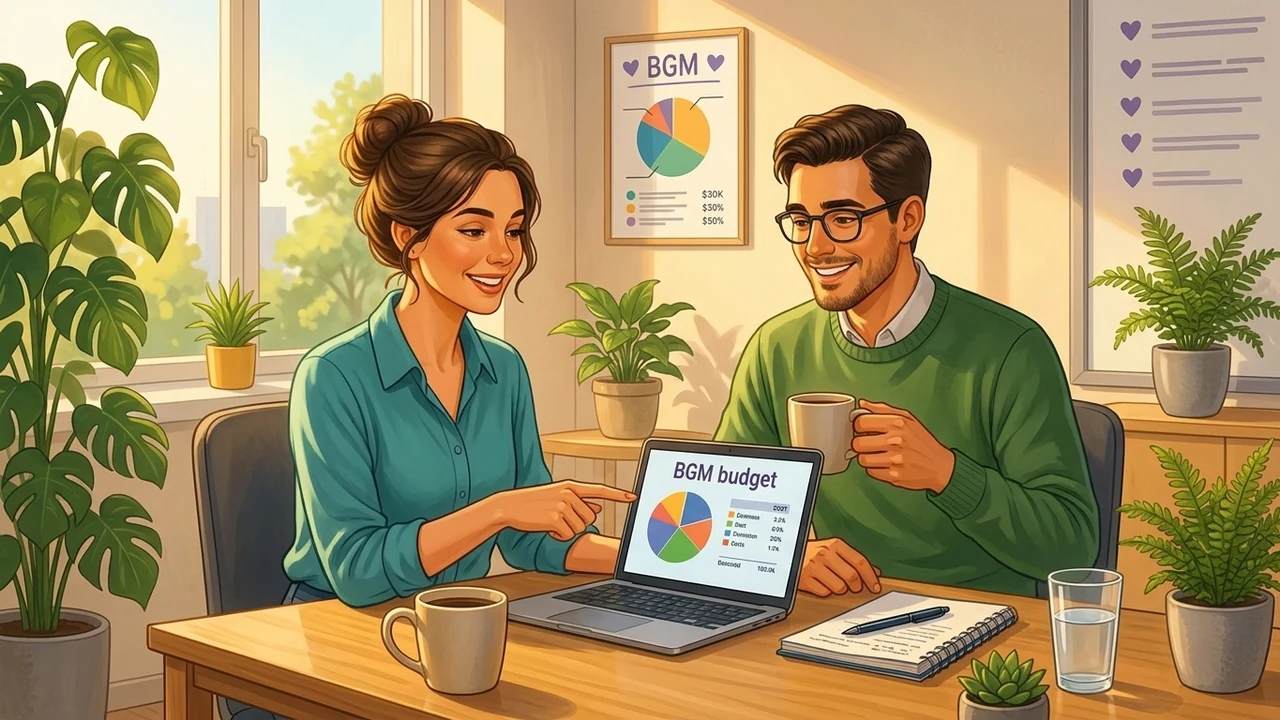
BGM Costs for SMEsWhat does a complete BGM (workplace health management) program cost at a mid-sized German company?BGM costs €200–600 per employee/year in Germany. Under Section 3 No. 34 EStG (€600 tax-free) and statutory health insurance subsidies (Section 20b SGB V), many measures become effectively cost-neutral. Median ROI 1:2.7 (IGA Report 40).
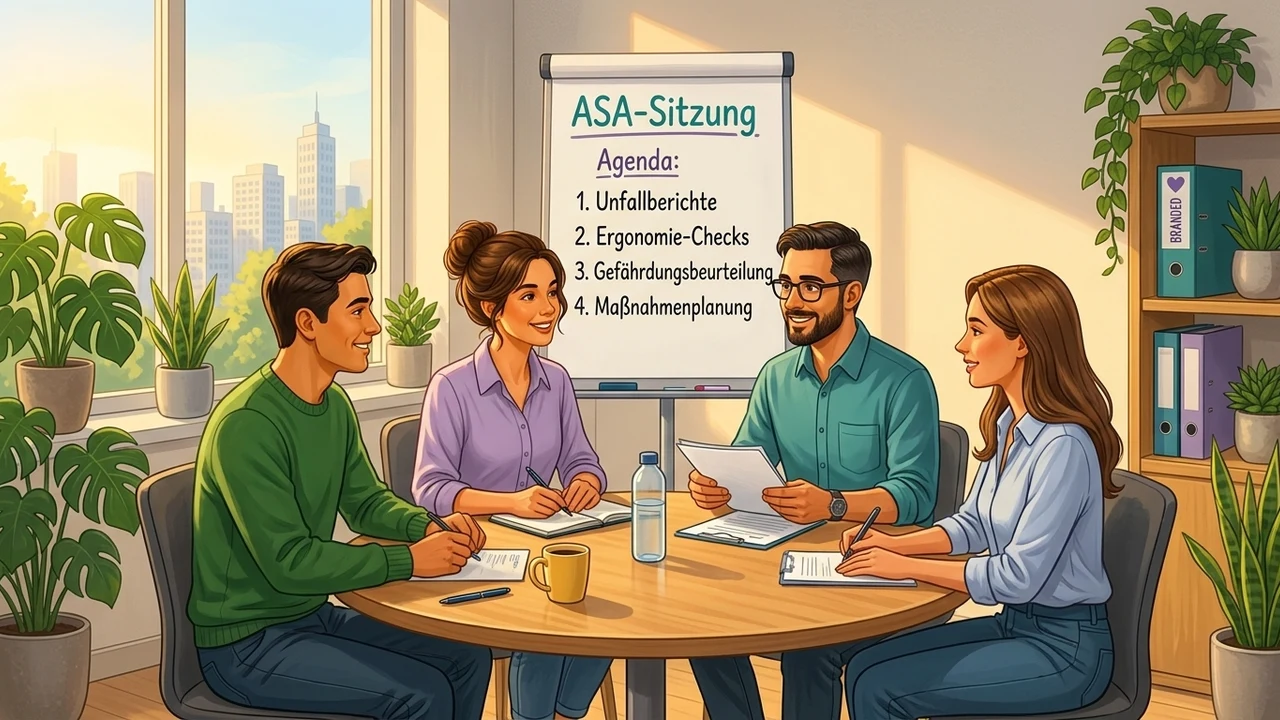
ASA: Requirements & MinutesHow often must the ASA (occupational safety committee) meet — and what has to go into the minutes?Germany's Occupational Safety Committee (ASA) must meet quarterly once a company has 20+ employees (ASiG Sec. 11). Who must attend, what the minutes must include, and how the ASA can integrate BGM.
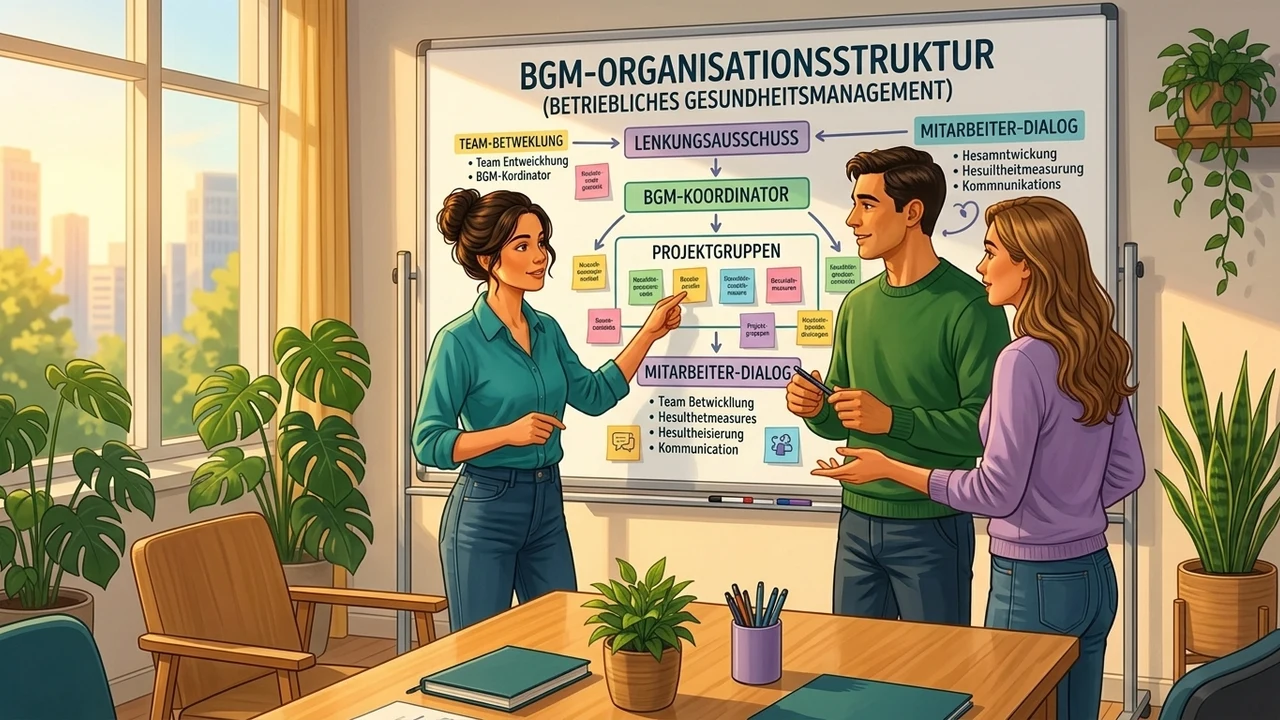
Building a BGM StructureHow do I build a BGM structure that is well organized and meets the prerequisites for a funding conversation with a German statutory health insurer (Krankenkasse)?Steering committee, coordination, management mandate: how to build a BGM structure that complies with German statutory health insurance (GKV) requirements — step by step, with mandatory equal representation, the Occupational Safety Act (ASiG), and Section 20b SGB V.

Health Data & GDPRWhich health data may HR analyze — and what does the GDPR prohibit?Permitted vs. prohibited data sources in BGM: statutory health insurer sick-leave reports yes, individual medical certificates no. GDPR Art. 9, anonymized analysis, survey rules.
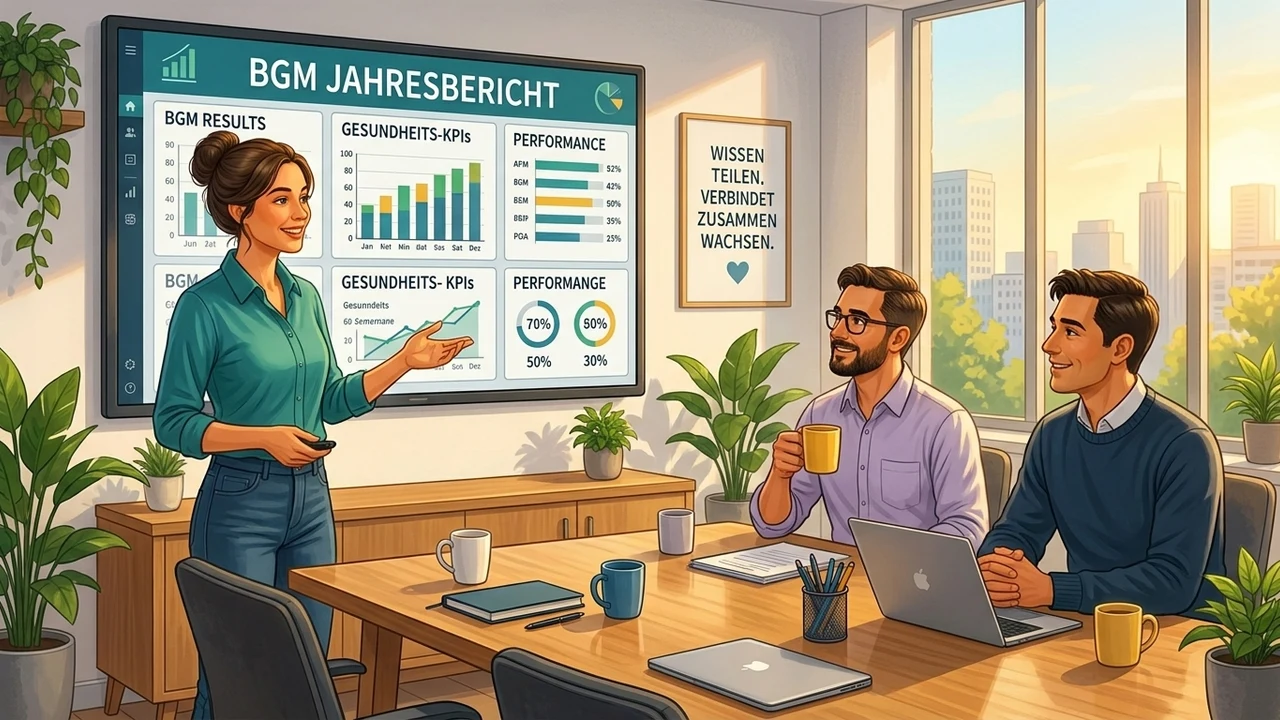
BGM Results ReportWhat belongs in the BGM results report for executive leadership?A GKV-compliant BGM report combines structural, process, and outcome evaluation — with the KPIs that convince management and pass the health insurer's audit.

Documenting a BEM Refusal the Legally Sound WayWhat do I need to do if an employee refuses the BEM meeting?Under German law, BEM participation is voluntary (Section 167(2) SGB IX) — but the refusal must be documented without gaps. The mandatory steps now, and how employers protect themselves.

Apply for GKV Funding for BGFWhat does health insurance pay for workplace health promotion (BGF) — and which measures actually qualify for §20b funding?Germany's statutory health insurance (GKV) funds BGF under §20b SGB V across 3 action areas. Which measures qualify? What's excluded? How to combine with §3 No. 34 EStG (€600)? Application steps.
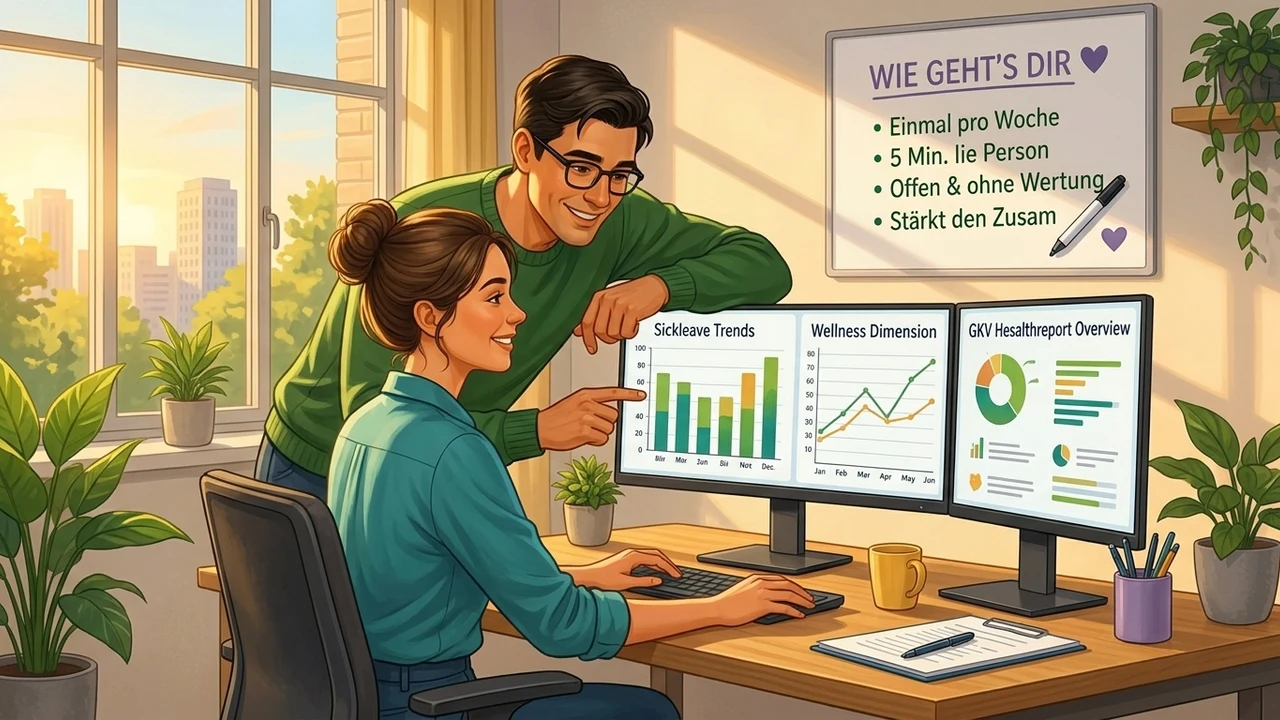
Using the GKV health report correctlyHow do I get the statutory health insurer's health report — and what do I do with it?The statutory health insurer's health report is free, shows sick-leave rates, diagnosis groups, and age structure — and is the most important data foundation for your BGM annual plan. Here's how to request and use it correctly.
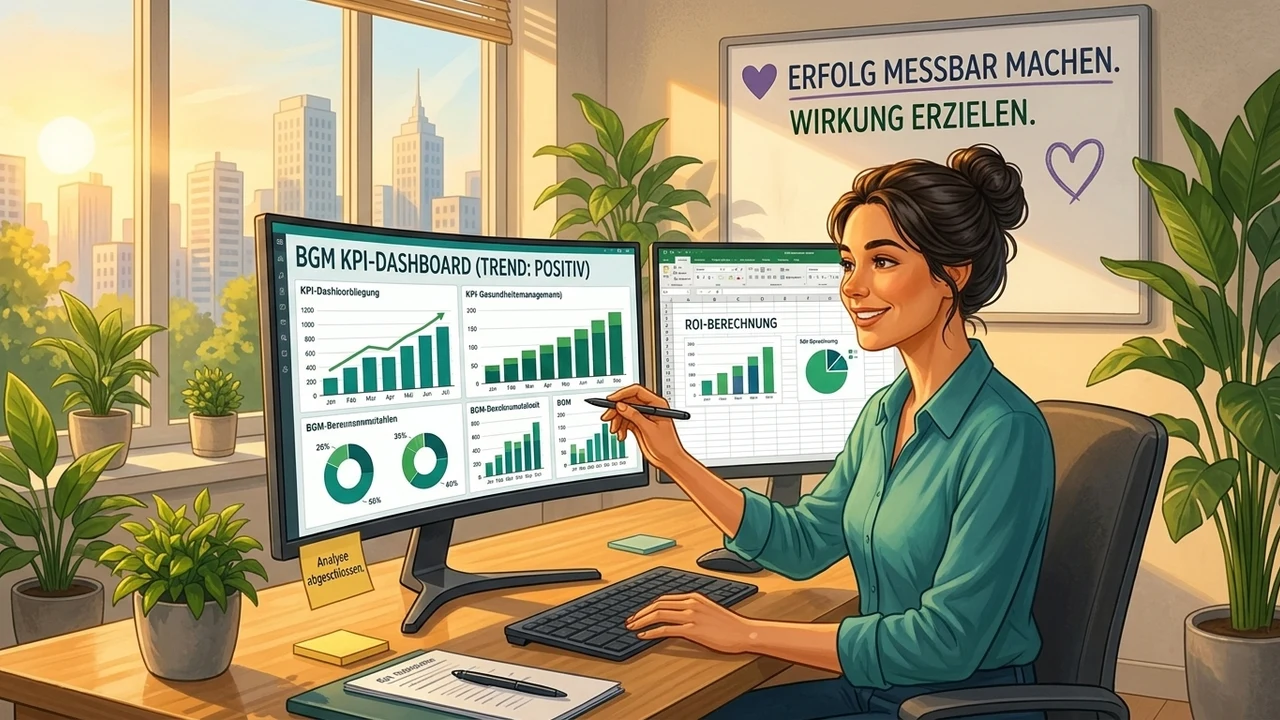
Measuring BGM Success: KPIs and ROIHow do I measure the success of my BGM program — and how do I calculate ROI for leadership?Chapman meta-analysis, balanced scorecard, and GKV evaluation requirements: how to measure BGM success with hard numbers — and win over leadership with real ROI.

GDPR-Compliant BGM Employee SurveyHow do I run a BGM employee survey in compliance with GDPR — and what do I do with the results?Employee surveys in BGM: which instruments (SALSA, COPSOQ, WHO-5), which GDPR requirements (Art. 9), when to involve the works council (§87 BetrVG), and how health circles complement them.
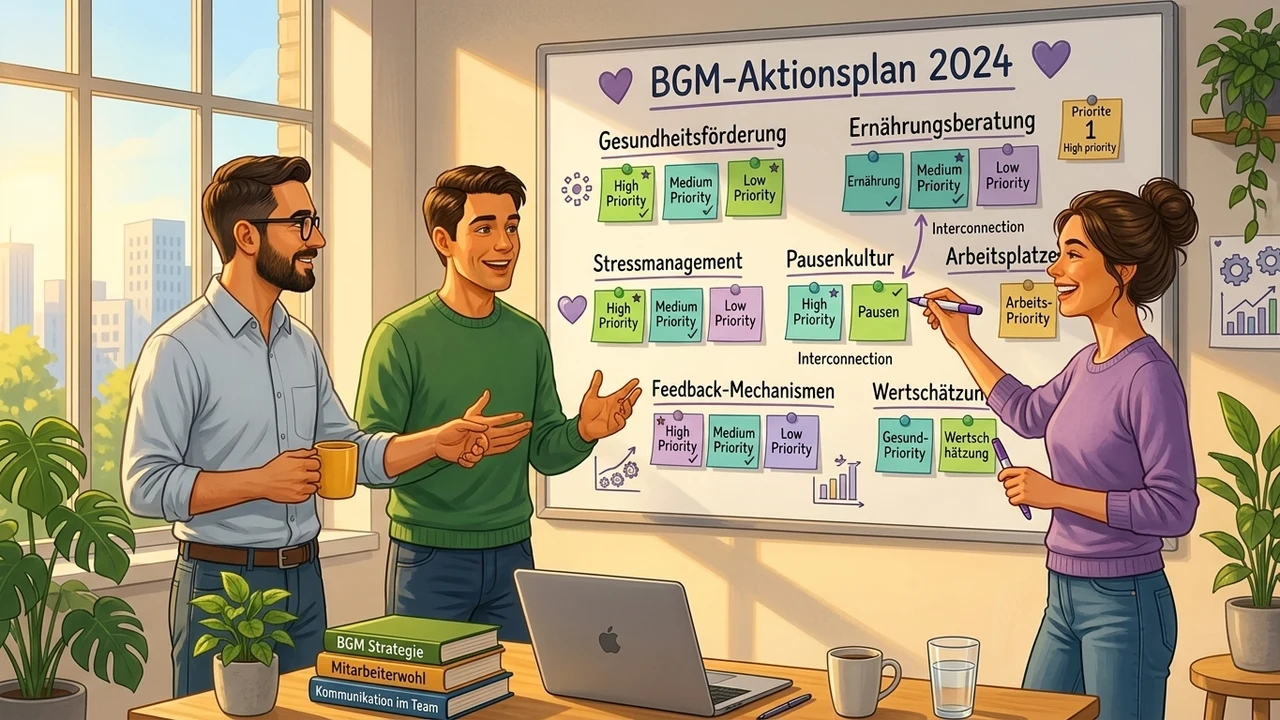
Create BGM Action PlanHow do I turn analysis results into a concrete BGM action plan?Prioritize analysis results, plan measures, secure budget approval: how a GKV-compliant BGM action plan comes together — with a prioritization matrix, resource planning, and management sign-off under German § 20b SGB V.

Embedding BGM Long-TermHow do I embed BGM (workplace health management) permanently in a company — and what does the GKV guideline require for Phase 6?BGM often stalls after year one. The GKV guideline (§20b SGB V) requires a documented continuous-improvement cycle, regular risk assessments (§5 ArbSchG), workplace safety committee meetings (§11 ASiG), and integration with BEM (§167 SGB IX).
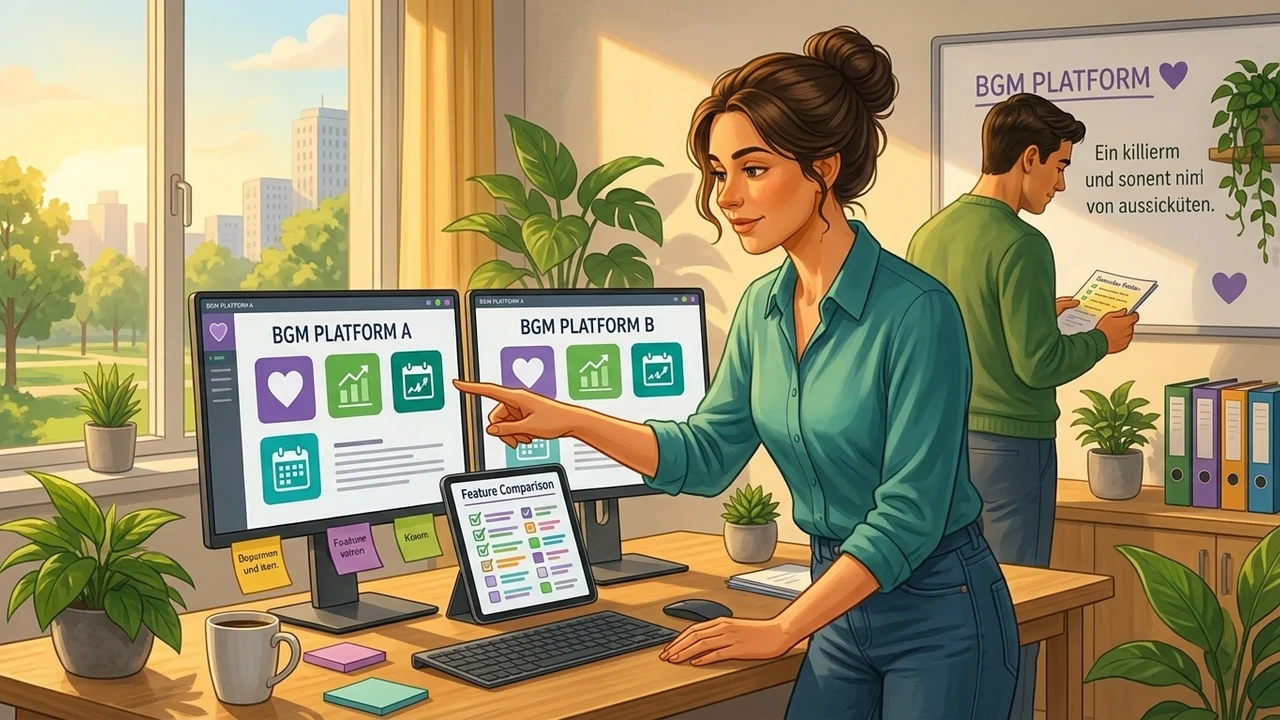
BGM Software ComparisonBGM Software Compared: What Features Does the German Mittelstand Actually Need?BGM software for SMEs must cover GBPsych (Sec. 5 ArbSchG), BEM deadlines (Sec. 167 SGB IX), and BGF documentation (Sec. 3 No. 34 EStG). Criteria, pitfalls, and cost comparison for 50–200 employees.

BGM Compliance AuditBGM Compliance Audit: How Does the German Labor Inspectorate Check Your Company?What does the labor inspectorate check in workplace health management? GBPsych (Sec. 5 ArbSchG), BEM documentation (Sec. 167 SGB IX), BGF proof (Sec. 3 No. 34 EStG). 5 common mistakes + self-check checklist for SMEs.

GBPsych FinesViolating the GBPsych Requirement: What Fines Are at Stake — and How Can Employers Protect Themselves?Under German law, a missing or non-audit-proof GBPsych can trigger fines up to €30,000 under §25 ArbSchG. 75% of organizations have no holistic BGM, according to #whatsnext 2025 (TK/IFBG). Here's how to avoid the penalty.
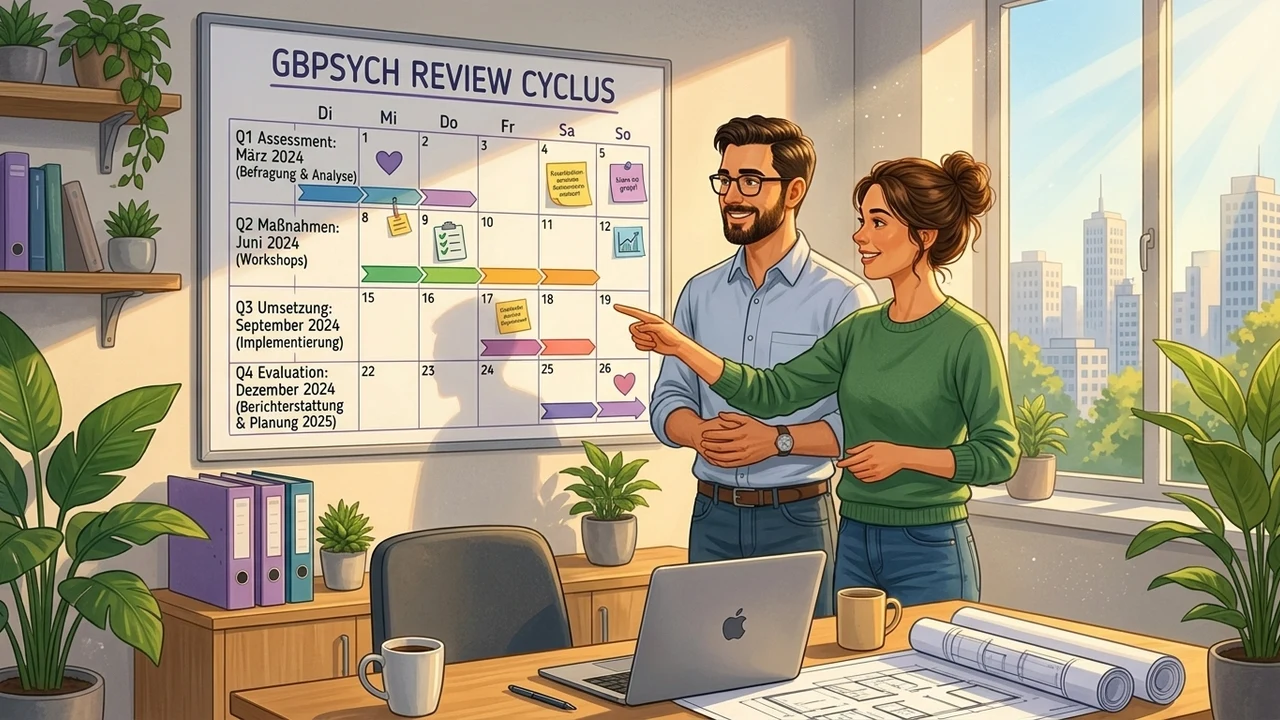
GBPsych: Repetition and DeadlinesHow Often Must the GBPsych Be Repeated? Deadlines and Triggers at a GlanceThe GBPsych has no statutory minimum interval — but clear triggers: significant changes to work, new hazards, accidents, or complaints. When a repeat assessment is mandatory under German law, and what the BAuA recommends.

BEM and Dismissal ProtectionTermination for Illness Without a BEM Program: What Does the Employer Actually Risk?Under German labor law (BAG ruling 7 AZR 698/14), dismissal without a BEM reintegration process is regularly deemed disproportionate. What employers must demonstrate, which documents protect them, and which mistakes leave terminations vulnerable to challenge.

BEM 42-Day DeadlineBEM After 42 Days: When Exactly Must the Employer Offer the Meeting?Starting at 42 cumulative absence days within 12 months, German employers must offer BEM (workplace reintegration management) under §167 SGB IX. How exactly is this counted? When is the deadline triggered? BAG ruling 7 AZR 698/14 explained.
📄
Return-to-Work Talk vs. BEMReturn-to-work talk, sick-return interview, or BEM (workplace reintegration): what's the difference?Note: this explains German law. BEM (workplace reintegration management) is mandatory from 42 sick days (Sec. 167 SGB IX); the classic sick-return interview has no legal basis and is often seen as a control tool. The return-to-work talk as a voluntary care offer: distinctions, pitfalls, works council co-determination.
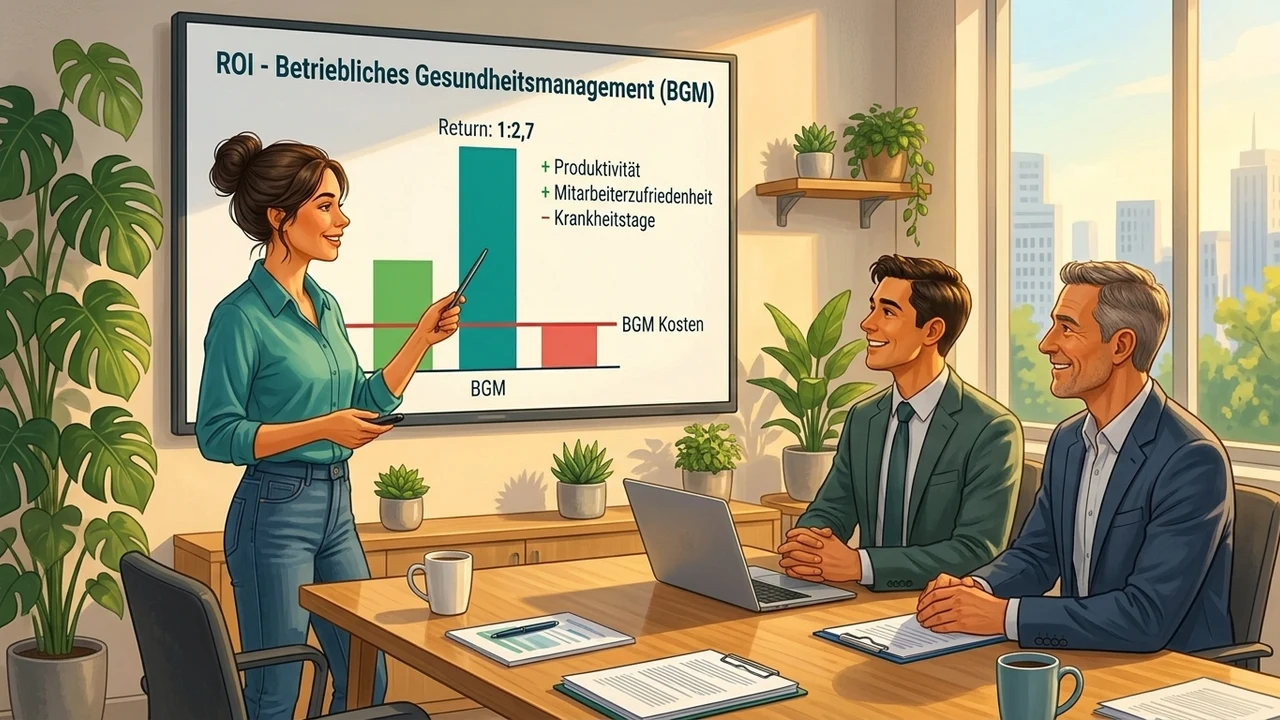
IGA Report: BGF ROIDoes BGF really pay off? What IGA Report 40 shows about the ROI of workplace health promotionAccording to IGA Report 40, the median ROI for workplace health promotion (BGF) is 1:2.7 — 85% of all analyzed programs delivered a positive benefit. What this means for HR managers and how to explain it to leadership.

TK Health Report 2025What does the TK Health Report 2025 say — and what does it mean for employers?Sick leave rate 2024: 5.23% (TK). 19.1 absence days per employee. Mental health disorders up 159% since 2006. What it means for psychosocial risk assessments, reintegration management, and tax-free workplace health promotion.

BAuA: Presenteeism CostsWhat are presenteeism costs — and why do they exceed absenteeism costs according to BAuA?BAuA GD 60 analyzes 285 studies: presenteeism costs (present but sick) exceed absenteeism costs. What this means for workplace health management (BGM) investments and how to measure presenteeism.
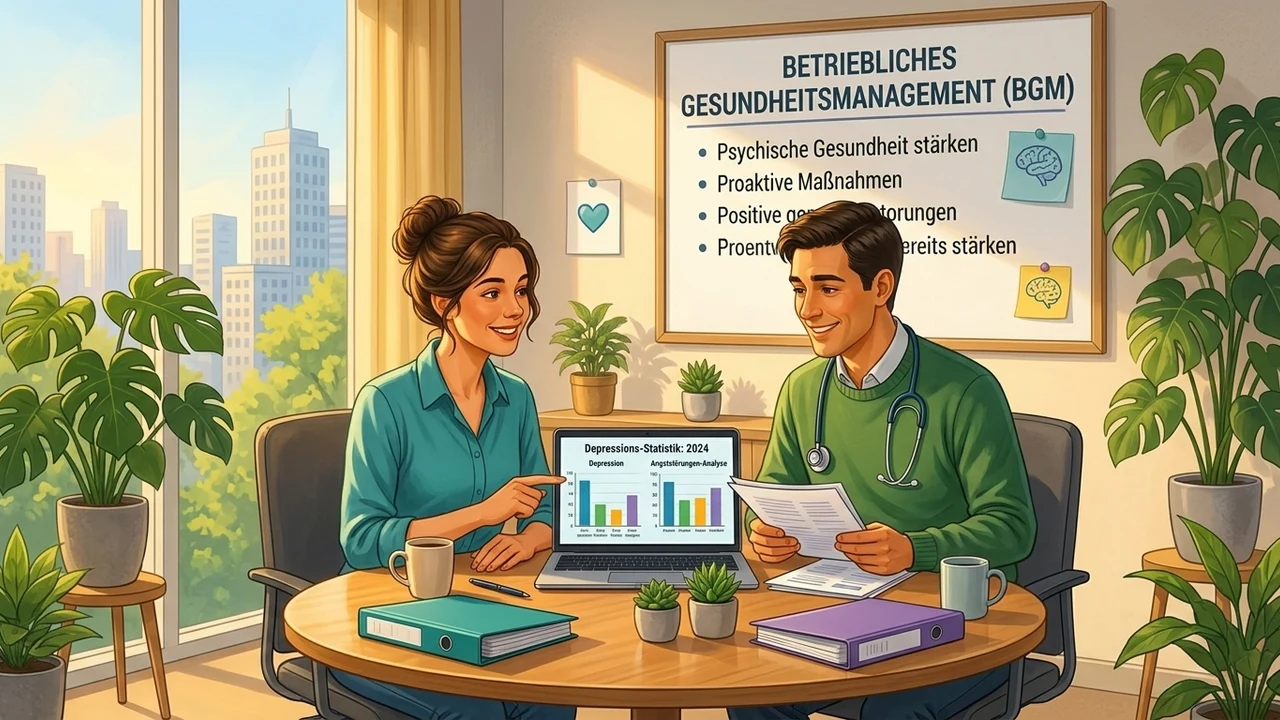
DAK Psychreport 2025 RLPDAK Psychreport 2025 Rhineland-Palatinate: What the Numbers Mean for Employers in the RegionDAK Psychreport 2025 (Rhineland-Palatinate): 364 sick days per 100 insured members, avg. 35-day case duration, depression as the most common single diagnosis. What employers in RLP and nationwide can learn.

Roland Berger Corporate Health 2020What does the Roland Berger Corporate Health Study show — and what should BGM decision-makers take away from it?Companies with a healthy culture have 20% fewer absence days. What Roland Berger's 2020 study reveals about BGM investment, barriers, and market volume — and what steps follow.

Prevention Guide for CEOsPrevention Guide for CEOs: What §20b SGB V Actually Means — and What ROI BGF DeliversGermany's GKV Prevention Guide governs which workplace health promotion (BGF) measures are subsidized up to €600/employee/year. What CEOs need to know: duty of care (§618 BGB), median ROI of 1:2.7 (IGA Report 40), and how to combine the subsidy with a tax bonus.

Prevention Guide for SMEsPrevention Guide for SMEs: What Small Businesses Under 50 Employees Need to Know About Section 20bDoes the Prevention Guide also apply to businesses with 10 or 20 employees? Yes — with simplified requirements. What SMEs need to know to receive statutory health insurance (GKV) subsidies.

HR Prevention GuideHR Manager's Guide to Prevention: How to File BGF Applications — and Which Measures Get GKV SubsidiesHR is responsible for filing BGF applications under §20b SGB V (German law). What gets a GKV subsidy, what doesn't — and the 5 most common mistakes that cost funding. With a concrete application process outline.

Prevention Guide for Works CouncilsPrevention Guide and Works Council: What co-determination rights apply to workplace health promotion (BGF) under §20b SGB V?Works councils have co-determination rights in BGF measures under §87(1) No. 7 BetrVG. What the GKV Prevention Guide says about it — and how works councils can actively help shape BGF instead of just blocking it.

Prevention Guide: Technical Deep DivePrevention Guide for BGM Officers: Full Technical Implementation Under §20b SGB VBGM officer? The GKV Prevention Guide explains everything — from needs assessment through course selection to GKV billing. What the 6-phase model means and how to document quality assurance.

Occupational Safety BasicsWhat does occupational safety cover — and which obligations apply starting with the first employee?Occupational safety is mandatory starting with the 1st employee: risk assessment (physical + psychological), the STOP principle, safety briefings. Legal basis and fine risks at a glance.

Occupational Physician: Requirements & CostsWhen Is an Occupational Physician Required by Law — and What Does Occupational Health Care Cost?Occupational health care is required by German law from the first employee onward (ASiG Section 2). Costs: approx. €600–10,000/year depending on company size and care model.

FASi: Duties & CostsWhat does a Health and Safety Specialist (FASi) do — and what does it cost?Under German law, a Health and Safety Specialist is mandatory from the 1st employee (ASiG § 5). Costs: €800–4,000/year depending on company size and support model.

Documentation & RetentionWhat must be documented in occupational safety — and how long must records be retained?Risk assessments, training records, BEM meetings, and accident reports must be documented and retained for up to 5 years under German law. The most common mistakes found during inspections.

BGM StakeholdersWho are the BGM stakeholders in a company — and who does what?Management, HR, works council, safety officers, occupational physician, health insurance fund, accident insurance fund — who is responsible for what in BGM?

BGF vs. BGMWhat is the difference between BGF and BGM?BGM is the systematic management framework; BGF (workplace health promotion) is one of its three pillars. A fruit basket alone is not BGM.

BGM 3-Pillar ModelWhat are the 3 pillars of the BGM model?Occupational health management rests on three pillars: occupational safety and BEM are mandatory, workplace health promotion is voluntary. Here's how they fit together.

External Partners in BGMWhich external partners support BGM — and what do they specifically offer?Berufsgenossenschaften, health insurance funds, and Germany's pension insurer (Deutsche Rentenversicherung) support BGM with funding, free training, and consulting — an overview under German law.

Obligations by Company SizeWhich BGM obligations apply at each company size?A risk assessment, occupational safety specialist, and company physician are required starting with the 1st employee. An occupational safety committee and safety officers are added at 20 employees. The overview by threshold.

Getting Started with BGMWhat's the best way to start with BGM — concretely, in the first week?Getting started with BGM without overhead: complete an assessment, document existing benefits, launch a first mini survey. No budget or prior knowledge required.

Legal Basics (Overview)What is legally mandatory in BGM, and what is voluntary?Risk assessment and BEM are legally mandatory under German law, while workplace health promotion is voluntary — but subsidized. The quick legal overview.

Fines & EnforcementWhat fines should I expect if BGM obligations aren't met?GBPsych violations cost €5,000–25,000, missing occupational safety measures €5,000–10,000, missing safety officer/company doctor €5,000–10,000 each. How an inspection unfolds.
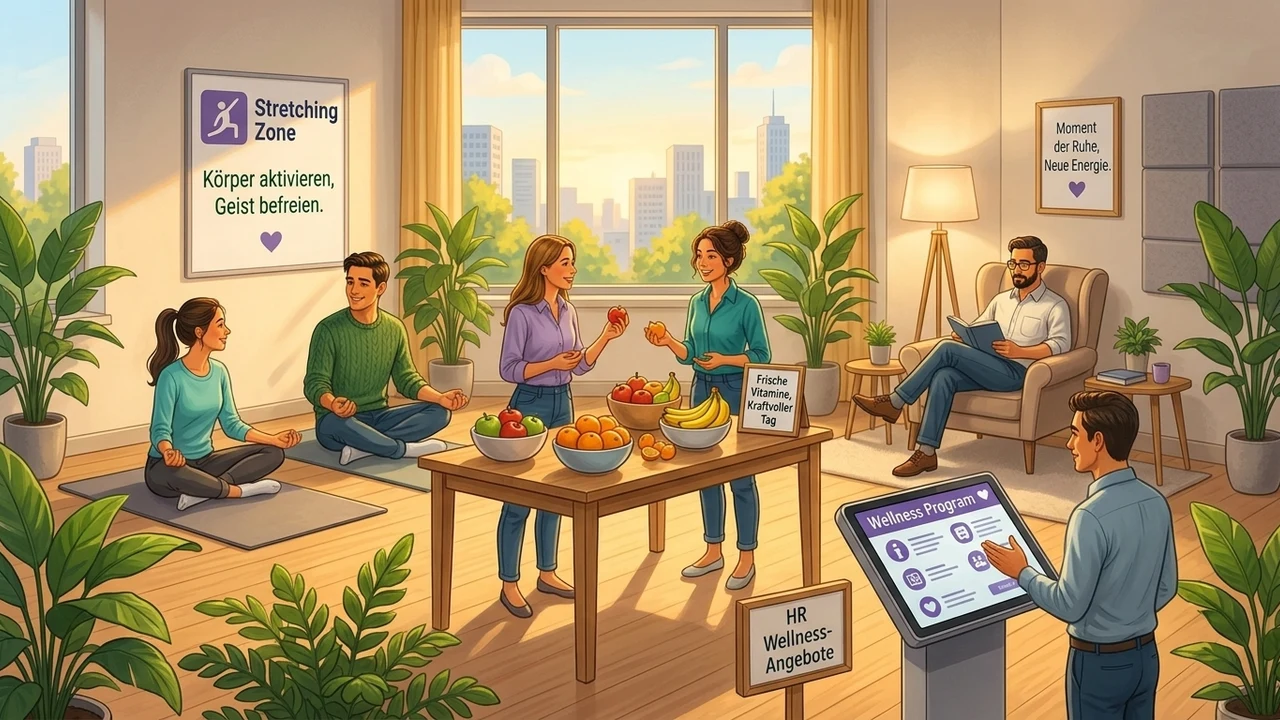
BGF Focus Areas & FundingWhat are the core areas of workplace health promotion (BGF) — and how is it subsidized?Workplace health promotion covers four focus areas — exercise, nutrition, mental health, addiction prevention. Funding up to €600 per employee/year, tax-free under German law.
📄
AI & Health DataMay AI analyze my employees' health data — what do the GDPR and the AI Act allow?AI analysis of employee health data: Art. 9 GDPR, the AI Act's emotion-recognition ban, works council co-determination, reintegration-management no-go zones — and the 4-tier model for legally sound AI use.
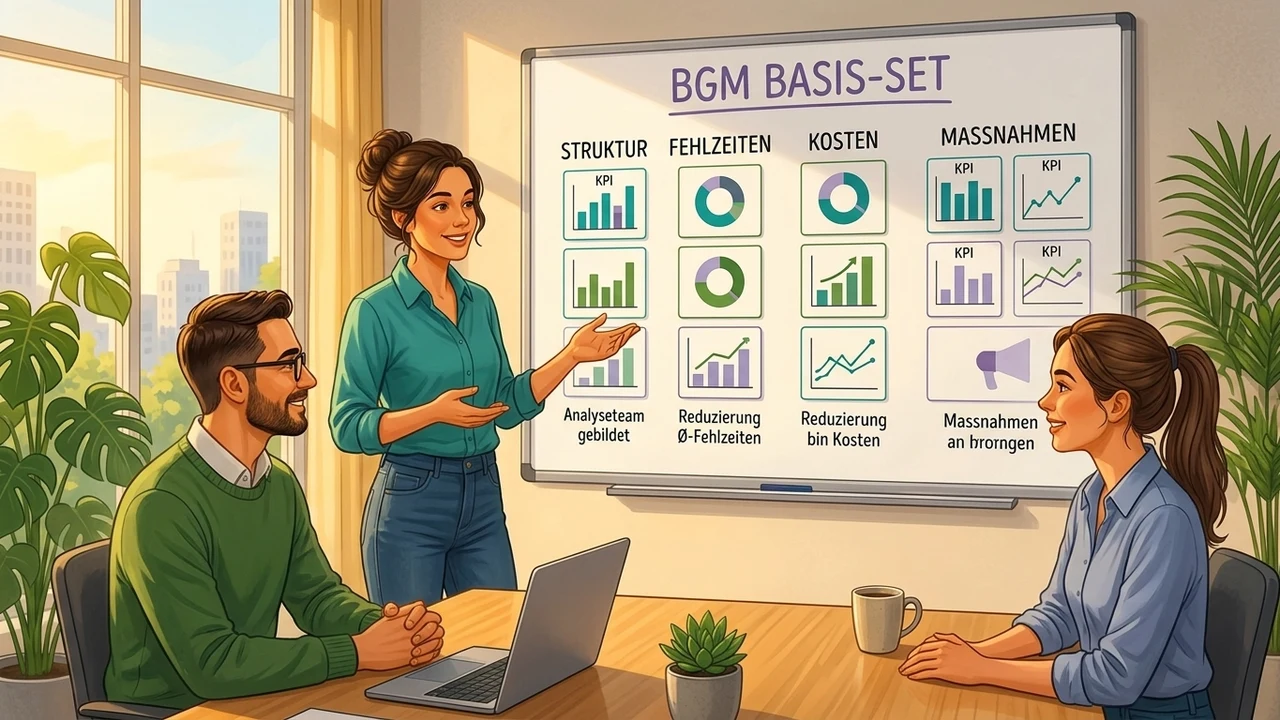
BGM KPIs: The Basic SetWhich KPIs belong in a basic BGM (workplace health management) reporting set — and how are they calculated consistently?The lean KPI set for getting started with BGM (workplace health management): headcount, sickness rate, absence costs, BEM rate, and participation rate — with formulas, data sources, and GDPR rules for reporting.
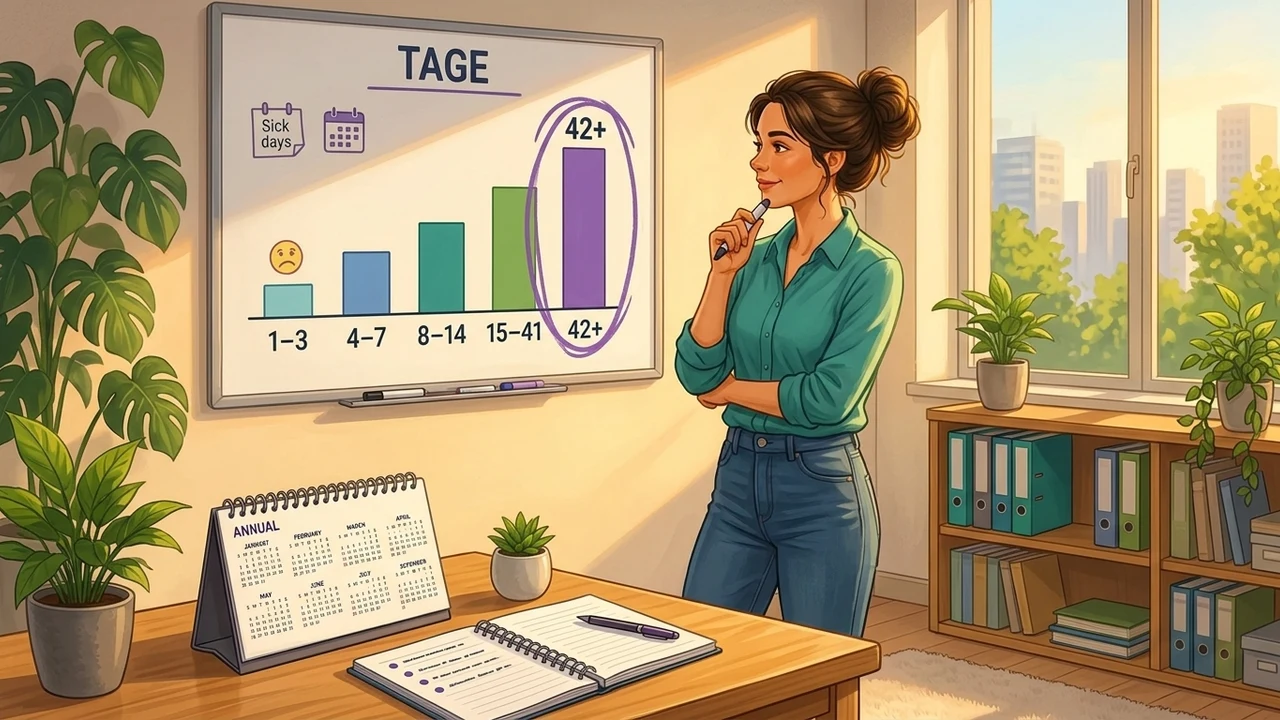
Absences by Duration GroupShort-Term or Long-Term Illness: How Do I Correctly Analyze Absences by Duration Group?Same sickness rate, two completely different problems: Duration-group analysis (1–3, 4–7, 8–14, 15–41, 42+ days) shows whether short-term or long-term illness is driving your absences — and what to do about each.
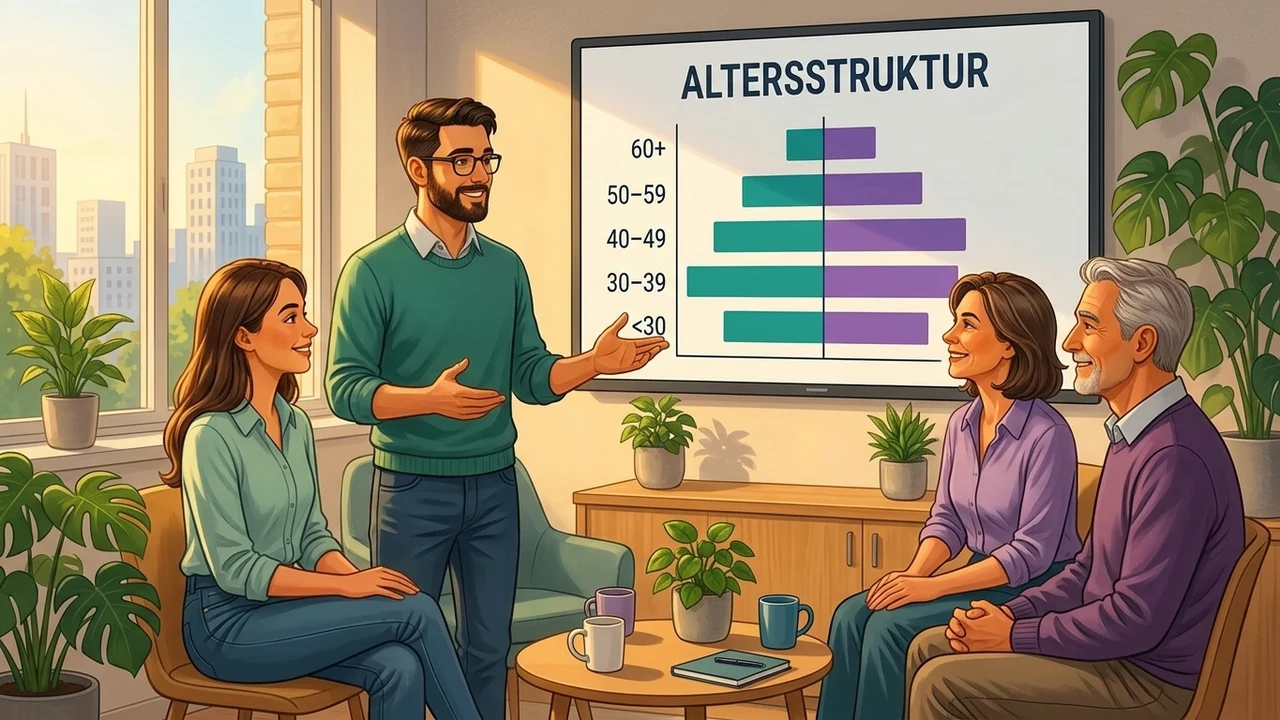
Analyzing Age StructureWhy does age structure belong in every BGM report — and how do I analyze it correctly?Average age hides more than it reveals: how to analyze your workforce's age structure using standard groups, spot demographic risks early, and derive BGM measures from the results.

GWI Trends 2026Which workplace wellbeing trends for 2026 matter for occupational health management in the German Mittelstand?The Global Wellness Institute names 7 trends for 2026 — from AI anxiety to menopause at work. What is global, what is already mandatory in Germany, and what mid-sized employers can act on now.

AI in the risk assessmentMust AI-related strain be included in the psychological risk assessment?§ 5 ArbSchG is technology-neutral: what introducing AI tools means for the psychological risk assessment — with the German data (BAuA DiWaBe 2.0), the six strain dimensions from the DGUV, and a survey framework for practice.

ISO 45003 & CSRDISO 45003 and CSRD: must mid-sized employers now report on psychological health?The Omnibus Directive (EU) 2026/470 raised the CSRD thresholds to 1,000 employees and €450m revenue. What that means for psychological health in reporting, what ISO 45003 delivers — and what of it is certifiable at all.

Menopause at workMenopause at work: what can employers actually do?Around one in three working women feels impaired at work by menopausal symptoms (DAK 2025). What German employers are legally required to do, what they can do voluntarily — and which measures work without breaking a taboo.
Put the knowledge into practice?
EasyBGM implements the workplace-health obligations from these guides directly — with documentation, tax circle and statutory-health-insurance billing in one software.