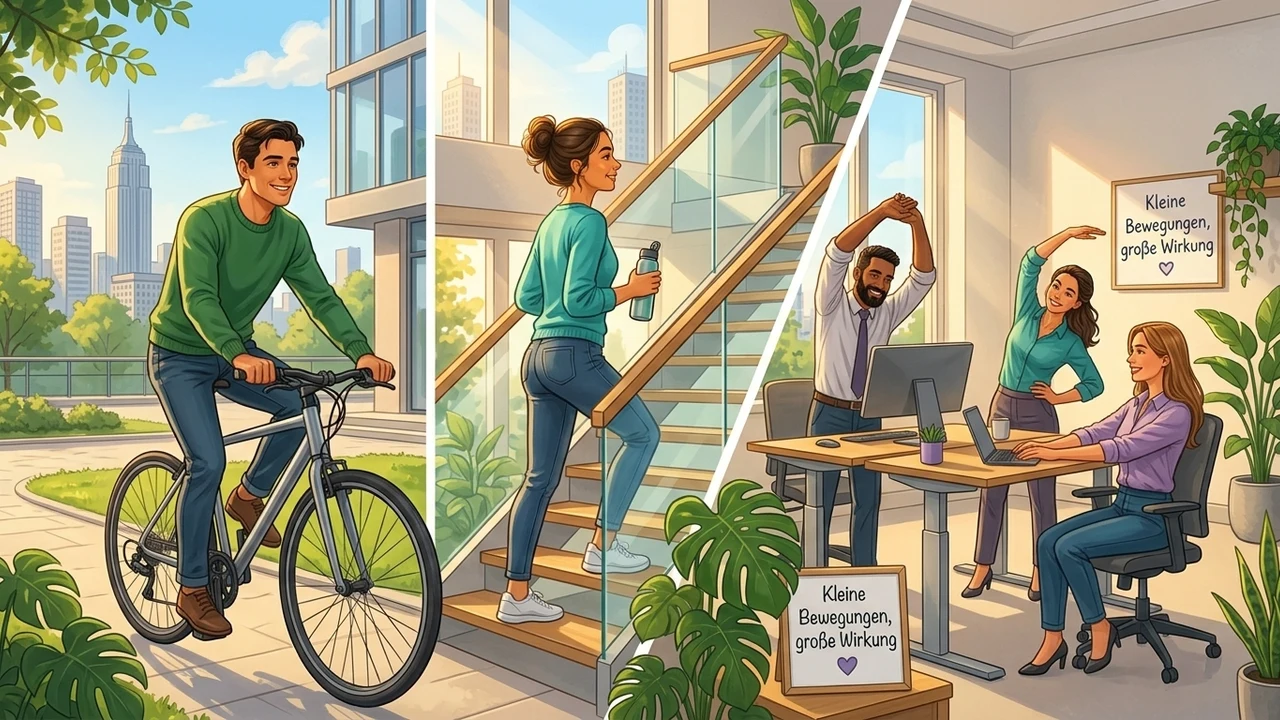
The most common excuse for too little movement in the office is time. Yet an effective movement break doesn't require an hour, workout clothes, or a free afternoon – just five minutes and a moment of decision.
What's possible in five minutes A short stretching routine for shoulders and neck, standing up and sitting down five times, one walk down the hallway and back – it sounds modest, yet it has measurable effects on circulation, back muscles, and mood. Movement breaks interrupt long sitting blocks at exactly the moment the body benefits from it most. Those who integrate them into the workday, rather than tacking them on, create a routine that sticks.
Guided, self-directed, or together – all three approaches work Video-guided break exercises offer structure for anyone who doesn't know what to do in five minutes. Self-direction works for people who simply stand up and stretch – without instructions. And the shared approach, where an entire team briefly stands up together at 11:00 a.m., creates the strongest social commitment. What matters isn't the format, but the consistency.
So setzt du es um
- 1Zwei bis drei niedrigschwellige Formate festlegen, die ohne Umkleide funktionieren – z.B. 5-Minuten-Bewegungspause, Steh-Meeting, Treppen-statt-Aufzug-Woche
- 2Kurze Übungssammlung (4–5 Übungen für den Arbeitsplatz) zusammenstellen und als PDF oder Aushang aufbereiten
- 3Feste Uhrzeit für die tägliche Bewegungspause vorschlagen, die nicht mit Kernterminen kollidiert
- 4Angebote vorstellen und betonen, dass Mitmachen freiwillig und ohne Sportkleidung möglich ist
- 5Eine erste kurze Bewegungspause direkt gemeinsam ausprobieren, damit die Hemmschwelle fällt
- 6Übungssammlung verteilen und einen sichtbaren Startpunkt setzen (z.B. „Ab Montag jeden Tag um 14 Uhr")
- 7Tägliche Bewegungspause als wiederkehrende Kalendereinladung sichtbar halten
- 8Wöchentlich ein wechselndes Mikro-Angebot anstoßen (aktives Meeting, Spaziergang zur Besprechung, Schritte-Woche)
- 9Selbst regelmäßig teilnehmen und Kolleginnen ermutigen, ohne Druck aufzubauen
- 10Im Team abfragen, welche Formate ankamen und welche eingeschlafen sind
- 11Zwei bis drei Angebote auswählen, die dauerhaft als Routine bleiben sollen
- 12Erfolge sichtbar machen (z.B. Anzahl gemeinsamer Bewegungspausen) und nächste Runde ankündigen
Was du brauchst
- Aufwand
- under 30 min
- Kosten
- Free
- Setup
- 30 Min.
- ✓ Easy to implement
- ✓ High acceptance
- ✓ Fast results
Förderfähig: bis 600 € steuerfrei
Als Teil eines strukturierten BGM-Prozesses ist diese Maßnahme nach § 3 Nr. 34 EStG bis 600 € pro Mitarbeitendem und Jahr steuerfrei. Zertifizierte Angebote bezuschusst zusätzlich die Krankenkasse nach § 20b SGB V.
Im BGM-Tool umsetzen
EasyBGM verbindet diese Maßnahme mit deinen BGM-Zielen, Anlässen und KPIs — alles an einem Ort, ohne Excel.
EasyBGM kostenlos testenZahlt ein auf
Reduce sick leave
Wirkung messen mit
GPAQ – Bewegungsverhalten (WHO)
Handlungsfeld
Physical Activity →Passender Anlass
- Internationaler Tag der Bewegung (10. Mai): Firmen-Bewegungstag
Passende Best Practices
Nicht sicher, wo ihr anfangen sollt? BGM-Reifegrad prüfen →