← Best-Practice-Bibliothek
Physical Activity0 € · kostenlosunder 30 min
Micro-breaks via reminder: Movement that reminds itself
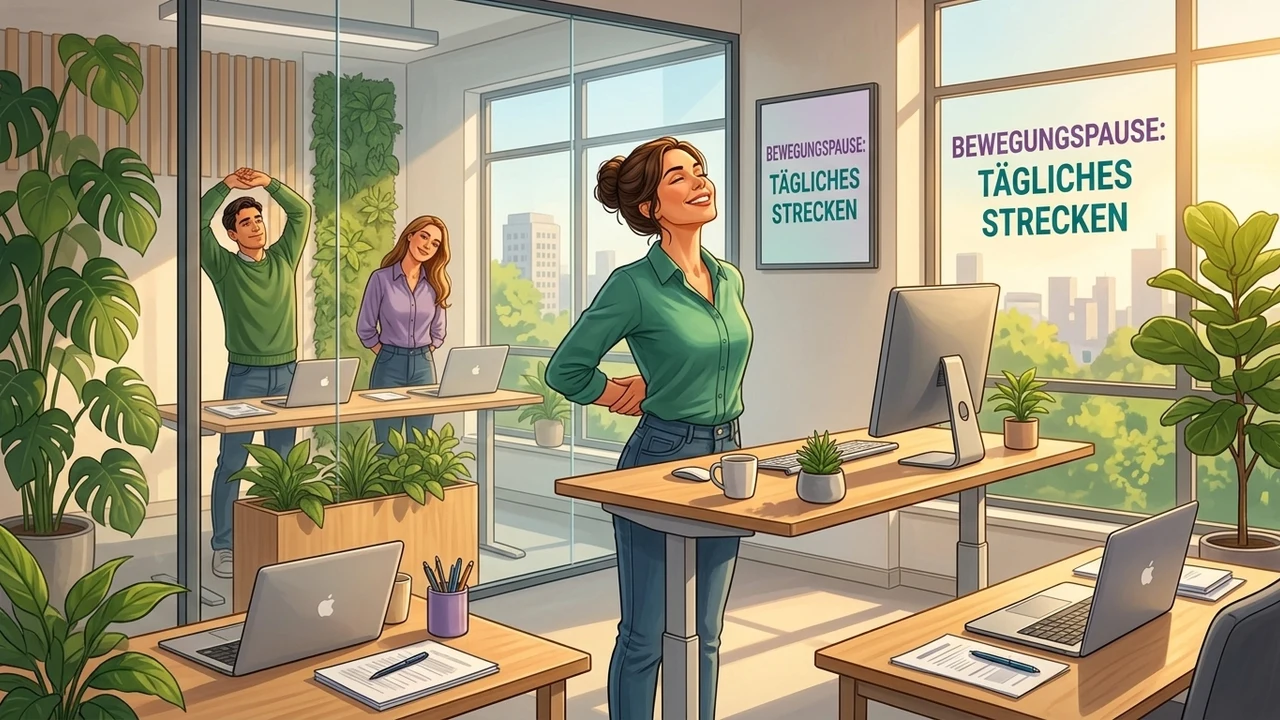
Behavioral prevention that works in everyday BGM practice: micro-breaks via reminder break up long sitting stretches – systematically, voluntarily, and in a way that's easy to document.
Why breaks fail even though everyone wants them Most people know that regular short interruptions do them good. But that knowledge disappears the moment focused work begins. Hours pass without standing up, and by evening the neck and back are stiff. A gentle reminder every 90 minutes replaces willpower with a system – and systems beat good intentions almost every time.
Two minutes are enough for a measurable effect No workout is needed. Standing up, rolling the shoulders, stretching once, glancing out the window briefly – that's enough to loosen muscles and clear the mind. What matters is regularity, not intensity. Many people report that the short break away from the screen noticeably improves concentration afterward.
Introduced voluntarily, surprisingly well received What matters is that the reminder invites rather than commands. Introduced as an opt-in that everyone can activate themselves, it's used with surprising loyalty – because it doesn't interrupt, it reminds you of something good. Making it mandatory achieves the opposite. The measure is ideal for screen-heavy teams and costs essentially nothing.
So setzt du es um
- 1Erinnerungs-Kanal wählen: Kalender-Serientermin, Chat-/Teams-Reminder oder App – etwas, das automatisch auslöst
- 2Rhythmus festlegen: alle 90 Minuten ist ein guter Standard für Bildschirmarbeit
- 33-5 einfache 2-Minuten-Übungen bereitstellen (Nacken, Schultern, Rücken, Handgelenke, Augen)
- 4Klarstellen: Pausen sind erlaubt und erwünscht – nicht als Faulheit, sondern als Leistungsschutz framen
- 5Reminder für Interessierte aktivieren und die Übungsanleitung teilen
- 6Freiwilligkeit betonen: Wer nicht mag, deaktiviert die Erinnerung jederzeit
- 7Als Führungskraft selbst sichtbar mitmachen – das nimmt die Hemmung, im Büro aufzustehen
- 8Reminder laufen lassen – die Automatik ist der Kern, kein manueller Aufwand nötig
- 9Übungen gelegentlich austauschen, damit es nicht eintönig wird
- 10Kurze Aktiv-Pausen im Team normalisieren (z.B. gemeinsame Dehnpause nach einem langen Meeting)
- 11Nachfragen: Werden die Pausen genutzt? Stört der Rhythmus?
- 12Frequenz bei Bedarf anpassen (manchen reicht 2x täglich)
- 13Effekt beobachten: weniger Verspannungs-Klagen, mehr Bewegung im Alltag
Was du brauchst
- Aufwand
- under 30 min
- Kosten
- Free
- Setup
- 15 Min.
- ✓ Free
- ✓ Automated
- ✓ Low threshold
Förderfähig: bis 600 € steuerfrei
Als Teil eines strukturierten BGM-Prozesses ist diese Maßnahme nach § 3 Nr. 34 EStG bis 600 € pro Mitarbeitendem und Jahr steuerfrei. Zertifizierte Angebote bezuschusst zusätzlich die Krankenkasse nach § 20b SGB V.
Im BGM-Tool umsetzen
EasyBGM verbindet diese Maßnahme mit deinen BGM-Zielen, Anlässen und KPIs — alles an einem Ort, ohne Excel.
EasyBGM kostenlos testenZahlt ein auf
Expand movement offeringsReduce physical complaints
Wirkung messen mit
GPAQ – Bewegungsverhalten (WHO)
Handlungsfeld
Physical Activity →Passender Anlass
- Tag der Rückengesundheit
Passende Best Practices
Nicht sicher, wo ihr anfangen sollt? BGM-Reifegrad prüfen →