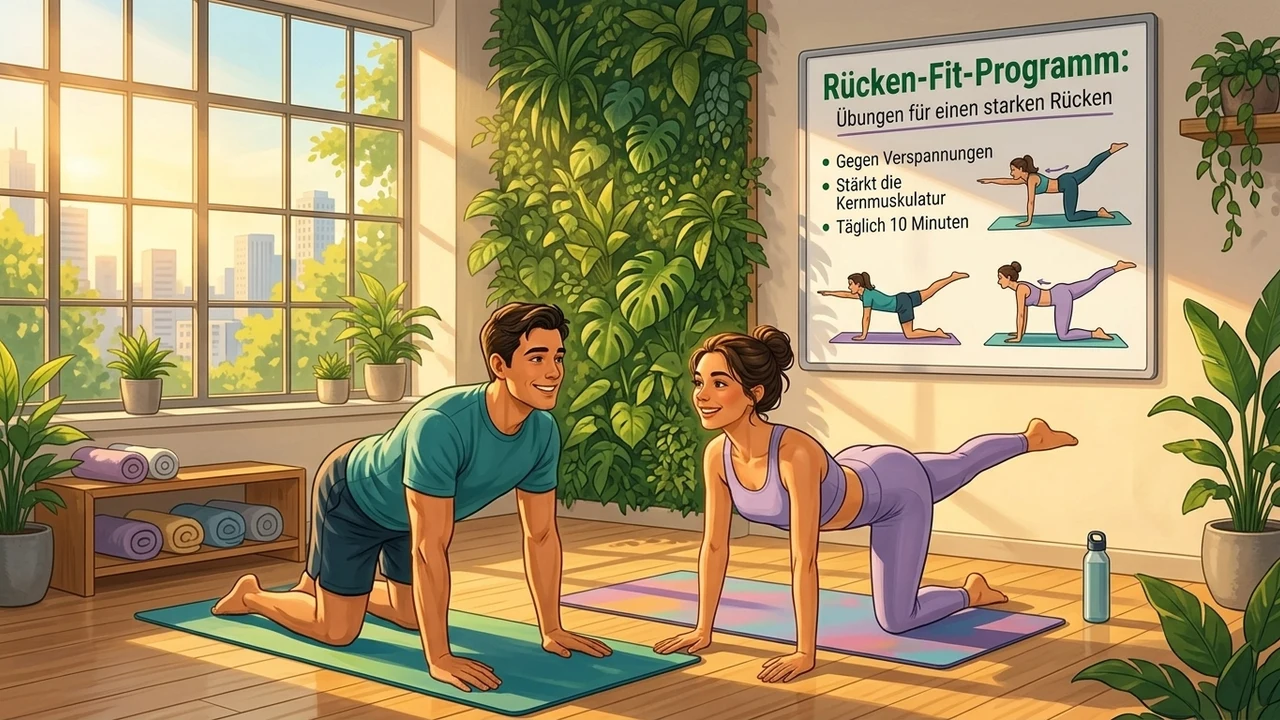
Ten minutes of back training sounds like too little — and that's exactly the point. Anyone who believes BGF-effective movement requires at least an hour and a locker room underestimates how much value lies in short, consistent sessions. Back-Fit Express is built for workforces that don't have time — yet still sit at a desk every day.
Why the back needs exactly this kind of training Muscle fatigue doesn't come from load, but from one-sided posture. Anyone who sits for eight hours unconsciously tenses the same muscles while letting others weaken. Short, targeted sessions — led by a physiotherapist or a video — interrupt exactly this pattern. After just two weeks of regular 10-minute sessions, many employees report that the afternoon pulling sensation in their back noticeably subsides.
How to establish the Express as a daily ritual The secret lies in the trigger: a fixed time in the calendar works better as a recurring appointment than as a good intention. Teams that do the Back-Fit Express together — for example at 9:30 a.m. right after the first meeting — stick with it three times more often than individuals. The short break pays off twice over: concentration and back health both benefit.
So setzt du es um
- 1Stelle 10 einfache Rückenübungen zusammen (Dehnung, Kräftigung, Mobilisation) und hinterlege zu jeder eine kurze Video-Anleitung oder ein Poster.
- 2Lege den Rhythmus fest: 3 Einheiten pro Woche über 4 Wochen, jede Einheit rund 10 Minuten.
- 3Bereite ein einfaches Tracking vor, auf dem Teilnehmende ihre absolvierten Einheiten pro Woche eintragen.
- 4Stelle die Übungssammlung und die Video-Anleitungen zentral bereit und teile den Link mit allen.
- 5Erkläre den 4-Wochen-Plan und dass Rückenbeschwerden der häufigste Grund für Krankheitstage sind.
- 6Empfiehl feste Zeitfenster (z.B. Montag, Mittwoch, Freitag) und bitte alle, in Woche 1 die erste Einheit zu starten.
- 7Erinnere zu Wochenbeginn an die drei geplanten Einheiten und verlinke die Übungsvideos erneut.
- 8Variiere über die Wochen leicht die Übungsauswahl, damit Kräftigung und Dehnung abwechseln und es nicht langweilig wird.
- 9Ermutige die Teilnehmenden, ihre Einheiten im Tracking einzutragen, und lobe kontinuierliches Dranbleiben.
- 10Werte das Tracking aus: Wie viele Einheiten wurden im Schnitt pro Person geschafft?
- 11Frage per kurzer Umfrage ab, ob sich Verspannungen oder Rückenbeschwerden gebessert haben.
- 12Kläre, ob Interesse an einer Fortsetzung besteht, und plane bei Bedarf eine dauerhafte wöchentliche Rücken-Routine.
Was du brauchst
- Aufwand
- half a day
- Kosten
- Free
- Setup
- 60 Min.
- ✓ Addresses #1 cause of sick days
- ✓ Short exercises
- ✓ Doable at the workplace
Förderfähig: bis 600 € steuerfrei
Als Teil eines strukturierten BGM-Prozesses ist diese Maßnahme nach § 3 Nr. 34 EStG bis 600 € pro Mitarbeitendem und Jahr steuerfrei. Zertifizierte Angebote bezuschusst zusätzlich die Krankenkasse nach § 20b SGB V.
Im BGM-Tool umsetzen
EasyBGM verbindet diese Maßnahme mit deinen BGM-Zielen, Anlässen und KPIs — alles an einem Ort, ohne Excel.
EasyBGM kostenlos testenZahlt ein auf
Reduce physical complaintsLower absenteeism
Wirkung messen mit
GPAQ – Bewegungsverhalten (WHO)
Handlungsfeld
Physical Activity →Passender Anlass
- Tag der Rückengesundheit
Passende Best Practices
Nicht sicher, wo ihr anfangen sollt? BGM-Reifegrad prüfen →