← Best-Practice-Bibliothek
Stress & Mental Healthunder €100half a day
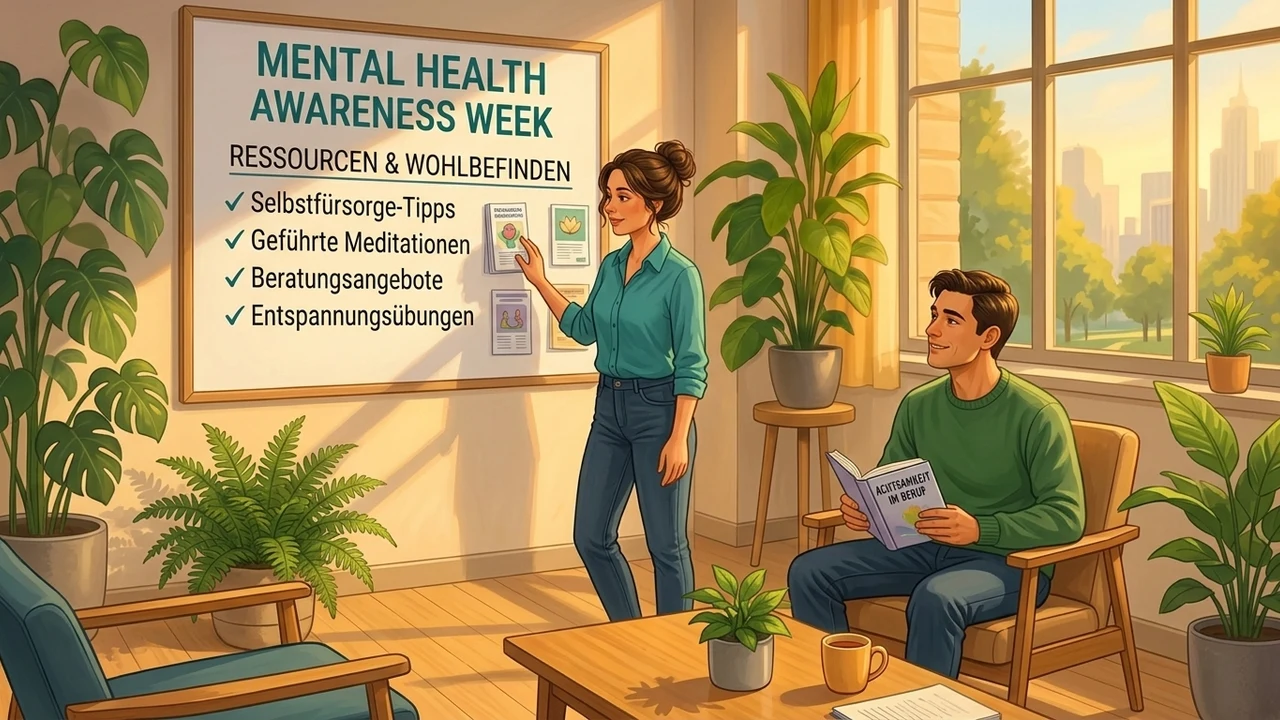
Mental Health Week: How to break the taboo
Addressing mental health systematically: a Mental Health Week is a structured BGM building block that breaks the taboo – and builds the bridge to the risk assessment of psychological strain.
Why a fixed occasion lowers the barrier Talking about strain is hard as long as it's seen as an individual problem. A themed week shifts it into the collective: suddenly everyone's talking about it, because this is "the week for it." This shared occasion removes the stigma from the topic and makes the first step much easier for individuals.
What makes an effective week A mix of low-threshold and in-depth elements has proven effective: brief daily impulses that don't overwhelm anyone, an open – ideally anonymous – conversation offer with experts, and a component that specifically addresses managers. Because attitude starts at the top: when supervisors take the topic seriously, teams find the courage too.
The right timing and the follow-through The format has the greatest resonance around World Mental Health Day in October. It's important not to think of the week as a one-off flare-up: it's the visible kickoff that should be followed by lasting, quiet offerings – from the mindfulness minute to clear points of contact. That's how an event becomes a culture change.
So setzt du es um
- 1Feste Themenwoche terminieren und pro Tag ein Schwerpunktthema festlegen (z.B. Stress, Schlaf, Pausen, Grenzen, Hilfe finden)
- 2Format je Tag wählen: kurzer Impuls-Vortrag, Tipp im Intranet, Mini-Übung oder Gastbeitrag
- 3Ressourcen zusammenstellen: interne Ansprechpartner, EAP/Beratungsangebote, seriöse externe Anlaufstellen
- 4Ton festlegen: enttabuisieren statt belehren – psychische Gesundheit als normales Thema behandeln
- 5Woche sichtbar eröffnen: kurze Ankündigung aus der Führung, warum das Thema zählt
- 6Programm der Woche transparent machen (ein Überblick, was wann kommt)
- 7Niedrigschwellig einsteigen: am ersten Tag ein leichtes, positives Thema (z.B. gute Pausen)
- 8Jeden Tag EIN Impuls – kurz und konsumierbar, keine Überfrachtung
- 9Freiwilligkeit betonen: Angebote statt Pflichtprogramm
- 10Hilfewege sichtbar wiederholen: Wo bekomme ich vertrauliche Unterstützung?
- 11Führungskräfte einbinden, damit das Thema von oben mitgetragen wird
- 12Anonymes Kurz-Feedback einholen: Was war hilfreich, was fehlte?
- 13Nutzung der Angebote und Ressourcen grob einschätzen
- 14Aus der Einmal-Aktion Dauerhaftes ableiten: welches Thema verdient laufende Aufmerksamkeit?
Was du brauchst
- Aufwand
- half a day
- Kosten
- under €100
- Setup
- 240 Min.
- ✓ Important signal
- ✓ High relevance
- ✓ Prevention
Förderfähig: bis 600 € steuerfrei
Als Teil eines strukturierten BGM-Prozesses ist diese Maßnahme nach § 3 Nr. 34 EStG bis 600 € pro Mitarbeitendem und Jahr steuerfrei. Zertifizierte Angebote bezuschusst zusätzlich die Krankenkasse nach § 20b SGB V.
Im BGM-Tool umsetzen
EasyBGM verbindet diese Maßnahme mit deinen BGM-Zielen, Anlässen und KPIs — alles an einem Ort, ohne Excel.
EasyBGM kostenlos testenZahlt ein auf
Reduce stress levels
Wirkung messen mit
COPSOQ – Psychische Belastung
Handlungsfeld
Stress & Mental Health →Passender Anlass
- Welttag der seelischen Gesundheit
Passende Best Practices
Nicht sicher, wo ihr anfangen sollt? BGM-Reifegrad prüfen →